NAKA19(Shirakawa-city):Komine Castle: Our Ancestors’ Wisdom(Hama, Naka, Aizu)
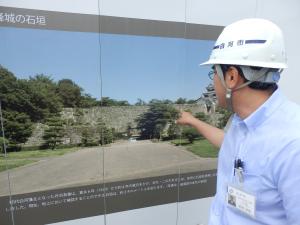
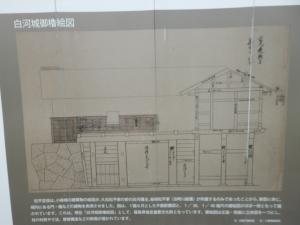
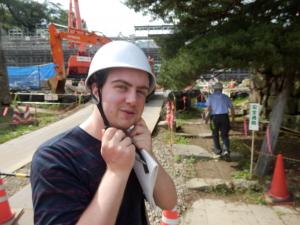
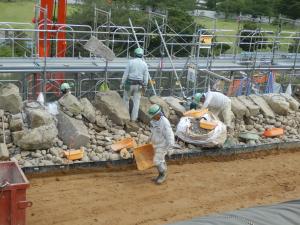
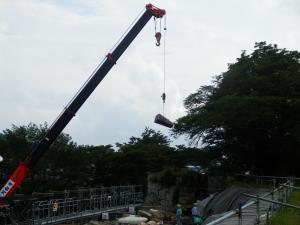
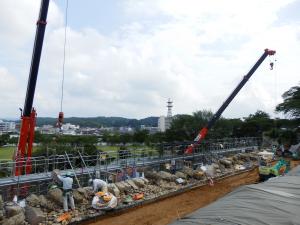
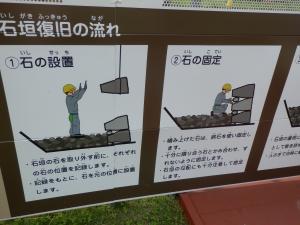
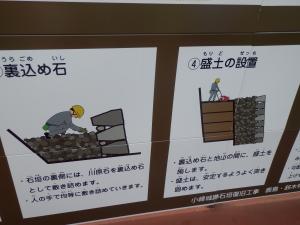
From the Egyptian pyramids to Stonehenge, there are many ancient structures around the world that show the knowledge and skill of ancient civilizations. While there are many theories about how these structures were made, no one is certain, and it feels as though some valuable knowledge has been lost over the passage of time. The importance of such knowledge can be seen here in Fukushima Prefecture, Shirakawa City, where they are hard at work repairing the earthquake damaged Komine Castle, using traditional construction methods. 10 sections of the castle stonewalls collapsed during the Great East Japan Earthquake, along with some being weakened. It is thought that the main cause of collapse was the modern construction method in which concrete was used to repair rain damage caused to the walls during the Showa Period. Rebuilding of the stonewalls started in January of this year, using traditional construction methods, which are thought to result in a more earthquake resistant structure. First the collapsed rocks are sorted using a number system, and the workers focus on getting the right rock in the right place, based on photographs and old diagrams. While looking at the stonewall we noticed that some rocks were a lighter colour than others. This is because workers had to replace particular rocks that were lost/damaged during the earthquake. According to our guide after a few years you won’t be able to see the difference. After donning hard hats, we were able to enter the castle grounds, and walked up to the top of the main stone wall. There we got to see the large cranes lifting the rocks into place like a giant 3-D jigsaw puzzle. A simplified process of the reconstruction of the stone wall using traditional techniques is as follows: -The main rocks are piled together based on photos and old diagrams and are fixed into places using smaller rocks. -Smaller stones are spread out carefully by hand behind the stone wall. -Dirt is piled between the stones and the earth wall of the hill and pounded until it is firm. Through faithful use of the traditional construction method, it is though the castle wall could potentially stand up better to earthquakes when compared to modern methods such as using concrete, as the smaller round stones will work to absorb any shaking. Earthquakes have always been common in Japan, and one cannot help think that perhaps the original creators of these stone walls had this in mind when using this particular technique. Reconstruction work on the south wall of the main keep is planned to be completed within the year, and the Castle Keep and Tower should be reopened to the public next year. Overall repairs on the castle are planned to be fully completed within 2016. I have the greatest admiration for all the people working hard to restore their cultural heritage while staying tradition. |